
Genes are the instruction manual our bodies follow to grow, repair and function every day. But did you know our genes also hold information about the past, a living history book if you know how to read it?
Join evolutionary geneticist, researcher and professor at the University of Copenhagen and the University of Cambridge, Prof Eske Willerslev, and computational biologist and professor at Columbia University, Prof Itsik Pe’er, as they break down this new area of science, and how DNA from ancient humans is being analysed alongside our own to trace migrations, pandemics, and other monumental events of the past.
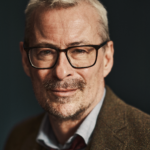
Professor Eske Willerslev
Prof. Eske Willerslev is an evolutionary geneticist and researcher in the fields of ancient DNA, DNA degradation, and environmental DNA. He holds a professorship at the University of Copenhagen, where he is the Director of the Centre of Excellence for Ancient Environmental Genomics (CAEG), as well as a professorship at the Department of Genetics, University of Cambridge.
During his PhD, Eske Willerslev established the field of environmental DNA. Later his group sequenced the first ancient human genome. Willerslev’s research in the last decade has focused on macroregional history, population genomics, pathogen evolution and paleoecological reconstructions. His achievements in this field have helped to understand ancient migration patterns, the spread of specific human traits across the world, pathogen spread and evolution, and ecosystem responses to climatic changes in space and time. This work has led to the rewriting of human history across Europe, Asia, Oceania, and the Americas, and has changed how we track human genetic adaptations.
Eske Willerslev has published more than 300 peer-reviewed articles. He is among the Web of Science’s most Highly Cited researchers within his fields.
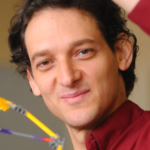
Professor Itsik Pe’er
Prof. Itsik Pe’er is a computational biologist and professor at Columbia University, known for developing algorithms to analyse large-scale genetic data.
He has made key contributions to identity-by-descent analysis, population genetics, and the study of genetic variation in groups such as Ashkenazi Jews, earning recognition, including ISCB Fellowship.
His research focuses on understanding how genetic variation influences human biology and disease, with the goal of improving genomic interpretation and precision medicine.
